
Green Season Safaris. What's the Worst That Could Happen?
Rain is certainly a possibility, and sometimes rather a lot of it, although a fair amount can fall overnight. But it's also a fascinating time to be in the bush, with animals giving birth, migratory birds arriving and some extraordinary wildlife concentrations. There are advantages and disadvantages, of course, and the considerably lower prices are worth mentioning too.
First, have a look at this...
Before we get into the pros and cons of travelling during the rains, take a couple of minutes to watch this short film from Kwando Safaris, whose camps we regularly use in Botswana.
They've called it “Is it even a safari?” — a question we've heard in one form or another over the years! We think they've captured the feel of the green season rather well, and it's a good starting point for the conversation.
The film is entirely Kwando's work, and we're very happy to share it with full credit to them.
Watch: “Is it even a safari?” — Kwando Safaris
So, what exactly is the green season?
Across much of Southern Africa, November brings the first real prospect of rain after months of increasingly dry and often very hot weather. Botswana, Zambia, Zimbabwe and parts of Namibia begin to change, sometimes remarkably quickly. Grass appears where there was bare earth, trees come into leaf, temporary pans fill with water and the bush takes on a completely different character.
The rains generally continue through March or April, sometimes into May, although the timing and intensity vary considerably from one region to another and from year to year.
For some people, the mere mention of a rainy season is enough to rule out travelling. Perhaps that's understandable when you're planning a holiday months in advance and hoping for sunshine. But there's a difference between the possibility of rain and spending your entire safari getting soaked.
Quite often, rain arrives overnight or in relatively short, heavy afternoon thunderstorms, with plenty of sunshine in between. Of course, that isn't a guarantee. Occasionally it can rain for extended periods, and sometimes it barely rains at all during your visit. Anyone who has spent time in Africa will know that the weather doesn't always follow the rules.
We've experienced some wonderfully enjoyable green-season safaris, including occasions when the forecast looked thoroughly unpromising but the weather barely interfered with our activities. We've also encountered rain that made getting around rather more interesting than anticipated.
Both are part of the experience.
Does the wildlife disappear?
Not at all, although its distribution can change quite considerably.
During the dry season, water becomes increasingly scarce, concentrating animals around permanent rivers, lagoons and waterholes. Once the rains arrive, temporary pans fill and fresh grazing becomes available over enormous areas. Wildlife can spread out, sometimes making particular species harder to find.
The vegetation becomes thicker too, and tall grass can make spotting smaller animals or predators more challenging. There is no point pretending otherwise.
But the rains bring something else: an extraordinary period of growth and reproduction.
Many antelope species time their births to coincide with the abundance of fresh vegetation. Impala lambs appear in large numbers, wildebeest calves and zebra foals become increasingly conspicuous, and the bush is full of young animals finding their feet.
All this new life naturally interests the predators. Lions, cheetahs, leopards, spotted hyenas and jackals continue their business, sometimes taking advantage of the abundance of inexperienced young prey.
For anyone interested in animal behaviour, there's a great deal happening. And while some wildlife becomes more dispersed, other species actually gather in far greater numbers during the rains than they do in the dry season.
Which brings us to Botswana.
Botswana's zebra migrations
One of the more interesting green-season wildlife events takes place around Botswana's Makgadikgadi and Nxai Pan grasslands.
As the rains arrive, thousands of zebra move towards the fresh grazing on the plains, travelling considerable distances from their dry-season ranges. There are two major migratory movements involved, including animals arriving from the Okavango region towards Makgadikgadi and others travelling from the Chobe and Zambezi floodplain regions towards Nxai Pan.
These are substantial migrations, yet they remain surprisingly unfamiliar to many people who have travelled extensively in Africa.
The seasonal grasslands around Nxai Pan can be particularly rewarding from December through March, and sometimes into April, depending on the rains. Large numbers of zebra gather alongside wildebeest, springbok and gemsbok, while lions, cheetahs, brown hyenas, jackals and bat-eared foxes add further interest.
We particularly enjoy the contrast between the open, green grasslands and the surrounding woodland, with wildlife using areas that can be considerably less productive during the dry months.
It's a good example of why the green season isn't simply a less expensive alternative to travelling in July or August. Some wildlife experiences are specifically associated with the rains.
Elsewhere in Botswana, the Okavango Delta, Mababe and the Kwando-Linyanti areas can also be rewarding, although you should expect differences in wildlife concentrations and accessibility between concessions.
And the Serengeti has its own ideas


A little farther north, the great wildebeest migration provides another wonderful example.
While most people associate the migration with the famous river crossings, one of its most remarkable events takes place during the greener months.
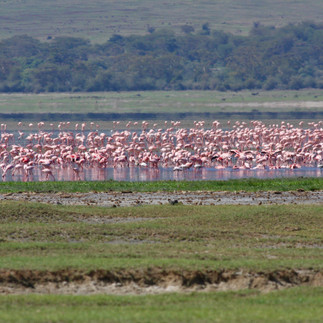
Between January and March, enormous numbers of wildebeest congregate on the short-grass plains of the southern Serengeti and Ndutu region, with calving generally reaching its peak during February.
Hundreds of thousands of calves are born within a relatively short period. The scale is extraordinary, but it's the constant activity amongst the herds that makes the experience so absorbing.
Cheetahs hunt across the open plains, lions and spotted hyenas patrol the herds, and jackals take advantage of the opportunities presented by so many newborn animals.
The southern plains are wonderfully productive at this time of year. For those interested in predator behaviour, interactions within the herds and the wider ecology of the migration, there's every reason to consider this period rather than focusing entirely on the river crossings.
It's a different chapter in the same annual wildlife story.
The birds are having a wonderful time
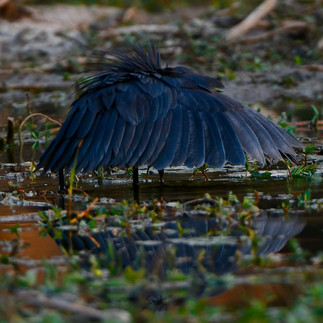

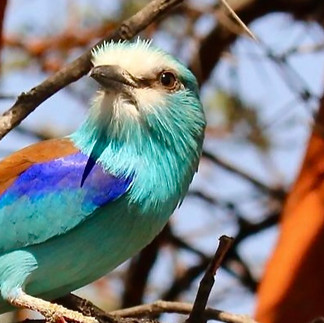
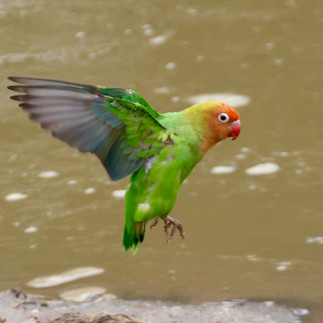
If you're interested in birds, the green season offers an enormous amount.
The summer rains coincide with the arrival of migratory species from Europe and Asia, adding substantially to the resident birdlife. European bee-eaters, European rollers, various warblers, flycatchers, cuckoos, swallows and numerous birds of prey become part of the everyday wildlife experience.
Amur falcons, arriving from their breeding grounds in eastern Asia, are particularly interesting. These remarkable little falcons undertake extraordinary migrations and can sometimes be encountered in considerable numbers.
Lesser kestrels, various harriers and other raptors take advantage of the seasonal abundance of insects and small animals.
And it's not just the migrants.
Many resident species are breeding. Weavers are building nests, bishops and widowbirds are displaying their spectacular breeding plumage, and the bush is full of birds calling, competing for territories and feeding young.
The rains also trigger an enormous increase in insect activity. Dragonflies appear around temporary pools, butterflies become numerous and colourful, and termite emergences can attract extraordinary concentrations of birds.
For anyone who takes an interest in the smaller details of the natural world, there's often far more to occupy your attention than during the drier months.
And, of course, the green vegetation, clean air and dramatic skies can be particularly appealing for photography.
Namibia deserves consideration too
Namibia is another country where the green season can be interesting, although it would be a mistake to assume that the entire country experiences the same weather.
The Namib Desert and much of the western country remain relatively dry, even during the summer months, while the northern and eastern regions receive considerably more rainfall.
Etosha changes substantially when temporary water becomes available. Animals are less dependent on the permanent waterholes, and locating particular species can require more patience, but the fresh vegetation, young animals and seasonal birdlife bring their own rewards.
In years of good rainfall, parts of the enormous Etosha Pan can hold water, attracting flamingos and other waterbirds. It doesn't happen to the same extent every year, but when conditions are right, the transformation is remarkable.
Elsewhere, even a modest amount of rain can change the appearance of Namibia's landscapes. Areas that appeared almost devoid of vegetation begin to show fresh growth, and occasionally flowering plants produce some wonderfully unexpected colour.
A journey combining Namibia's desert regions with its more productive northern wildlife areas can work particularly well, provided you understand the seasonal differences.
But there are some genuine drawbacks
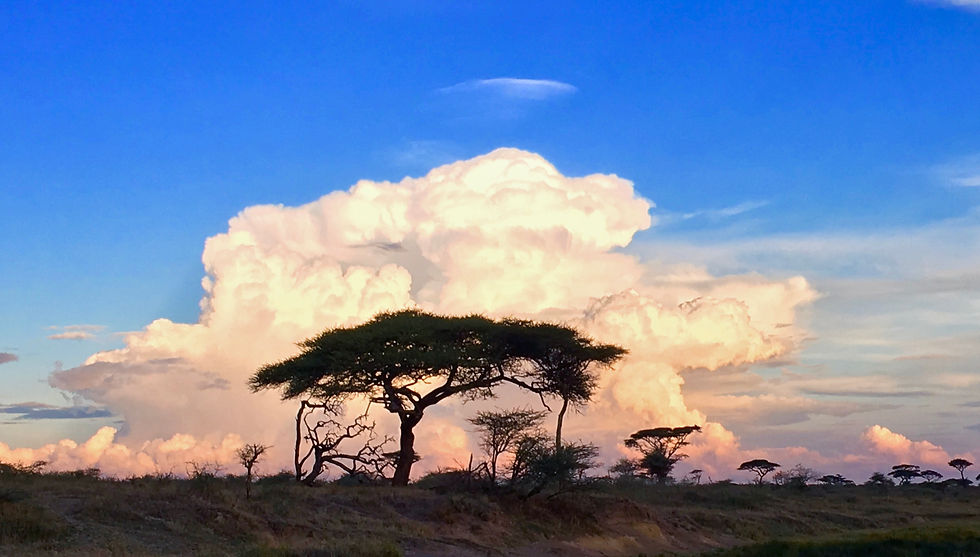
We wouldn't suggest travelling during the green season without considering the practicalities.
Heavy rainfall can make tracks muddy, and in some areas roads become extremely difficult or temporarily impassable. Remote transfers may take longer, and occasionally an intended route simply won't be possible.
This is especially relevant in parts of Zambia, where seasonal flooding and difficult access mean that many bush camps close during the wettest months. Similar considerations apply elsewhere, depending on the location and the infrastructure available.
Thicker vegetation can make game viewing more demanding, and wildlife may be more widely scattered than during the late dry season. There are also times when heavy rain interrupts activities, while higher humidity and increased insect activity can be less comfortable for some people.
Mosquitoes can become more numerous, so appropriate malaria precautions remain important in affected regions.
And photographers may find themselves dealing with rapidly changing light, wet equipment and the occasional frustrating downpour.
None of this is particularly complicated to understand. It simply means choosing the right areas and camps, rather than assuming every destination works equally well throughout the year.
There are places we would happily visit in February, and others where we would much rather wait until June.
Then there's the question of cost
One of the more welcome features of the green season is that rates at many camps can be considerably lower than during the traditional peak months.
Sometimes the difference is substantial, particularly when you combine several camps or take advantage of packages incorporating accommodation and internal flights.
There are also some excellent opportunities for solo travellers. A number of camps reduce or waive their single supplements during selected green-season periods, which can make a meaningful difference to the overall cost of a safari.
It isn't universal, and there are exceptions around Christmas, New Year and certain particularly popular wildlife periods. Nevertheless, it's worth looking at the actual prices rather than assuming that an African safari must cost the same throughout the year.
There may also be fewer guests in camp and fewer vehicles at sightings, although this depends very much on where and when you travel.
The point is simply that a lower price doesn't necessarily mean a correspondingly less interesting wildlife experience. Sometimes the season is different rather than better or worse.
So, what's the worst that could happen?
Well, you might get wet.
You might have to change a game-drive route because a track has become impassable, or spend an afternoon watching a thunderstorm instead of searching for lions. And you may have to work a little harder to find some of the animals that would be easier to locate during the dry months.
On the other hand, you could find yourself amongst thousands of zebra on Botswana's green plains, watching wildebeest calves being born in the Serengeti or enjoying extraordinary birdlife at its most active time of year.
You may find that the weather barely interferes with your safari at all. Or you might experience rather more rain than you would ideally have liked.
There is no single answer, and much depends on where you go, when you travel and what interests you most.
We certainly wouldn't suggest that the green season suits everyone, nor that it is necessarily better than the dry season.
But we've enjoyed some excellent wildlife experiences during these months, often in places that reveal a very different character once the rains arrive.
And when you take into account the wildlife, the seasonal changes and the sometimes substantial savings, there's plenty to think about.
The green season deserves consideration on its own merits, rather than being dismissed simply because there might be a little rain.
