
The Lions of Busanga – News from Our Home Patch
We might spend a lot of our time following wildlife stories from all over Africa and beyond, but we never stop keeping an eye on what's happening back on the Busanga Plains. After all, it's where Busanga Safaris began, and we still think of it as our spiritual home. And we're particularly interested in the lions. We've known some of these families for years, watched their cubs grow up, seen prides fall out and get back together, and wondered what's become of familiar individuals who've suddenly disappeared. There's always a bit of family drama going on!
For those who aren't quite sure where Busanga is (we'll forgive you!), the plains lie in the far north of Zambia's Kafue National Park, which covers some 22,400 square kilometres. The plains themselves form an extensive seasonal wetland, with much of the area flooded during the rains before the waters gradually recede and the grasslands become accessible again.
Busanga remains one of Africa's less-visited safari areas, with only a handful of small camps scattered across an enormous landscape. It's one of the things we've always loved about the place. You can spend hours with a pride of lions without another vehicle appearing, and there's still a great deal of country that visitors seldom reach.
Near the centre of the plains lies Shumba, an area particularly well known for its lions and home to one of the most closely followed prides in Busanga.
We've recently received a fascinating update from our friends at the Zambian Carnivore Programme (ZCP), whose researchers have been studying Kafue's large carnivores for many years. Their work, combined with the observations of the relatively few guides and operators who spend their seasons on the plains, allows us to follow individual lions over many years and better understand what's happening within the prides.
And the latest news from the Shumba Pride is particularly interesting.
A family with quite a history
To understand the latest developments, it's worth going back a little.
Many of the lions now occupying the central plains descend from a lioness known as Queen, who became something of a legend among the guides and researchers working in Busanga.
Queen's history stretches back to the old Papyrus Pride. Over the years she raised several litters, including daughters Maggie and Princess, whose own offspring and changing associations helped shape the prides we know today.
Princess, born in 2015, is one of the best-known members of this extended family. She's now an older, experienced lioness who has lived through changes in males, shifting family relationships and the other challenges of life on Busanga.
She's also been an important animal for ZCP, carrying a GPS tracking collar that has provided researchers with years of valuable information about the movements and relationships of the central plains lions.
One of the things ZCP has been observing is just how much the Shumba Pride has grown in recent years, and how the females have increasingly begun spending time in smaller groups, sometimes separating for long periods.
Are these temporary divisions, or are we watching the formation of entirely new prides?
It's a question the researchers are particularly keen to understand, and one that brings us to some interesting news from this year's monitoring work.
Vega – a familiar face reappears
One of the most encouraging developments concerns Vega, a lioness once regularly seen with the core Shumba Pride around the central plains.
Vega had become something of a mystery. Once a familiar member of the pride, she'd barely been seen for almost two years. In an area as extensive as Busanga, that doesn't necessarily mean something has happened to an animal, but it certainly leaves everyone wondering.
Well, the ZCP team recently found her, and she wasn't alone.
During monitoring work east of Kapinga Bush Camp, in an area known as Paradise, researchers came across Vega with cubs. It appears she's shifted her range eastwards, well away from the central areas where the Shumba lions are most frequently encountered.
It's encouraging news, not least because she's still breeding, although how her cubs fare in the longer term remains to be seen.
The ZCP veterinary team took the opportunity to fit Vega with a GPS collar. This is particularly valuable because, unlike the lions regularly encountered around the central plains, Vega now spends much of her time in country that is rarely visited.
Her collar will allow researchers to follow her movements and begin to understand whether she's still loosely associated with the Shumba Pride or has effectively established a separate pride of her own.
It will also help them monitor her cubs and reproductive success, something that's considerably harder to do when a lioness is seldom seen.
Princess and Yaya – together again
Meanwhile, two other females have been keeping the researchers guessing.
Princess, whom we've already introduced, and Yaya, another established breeding female within the extended Shumba Pride, appeared for more than a year to be spending very little time together.
ZCP suspected they might be witnessing another division within the pride, similar to what happened between Maggie and Princess several years earlier.
That was one of the reasons the team originally fitted Yaya with a tracking collar. By following her movements independently of Princess, they hoped to establish whether the two females were beginning to occupy different areas.
But the latest observations have been rather surprising.
This year, Princess and Yaya have been associating with one another again.
The researchers suggest that one possible explanation is that they have cubs fathered by the same male or males, although that's still a possibility rather than a confirmed reason.
It's a good example of why long-term monitoring matters. Looking at the lions over a single season, it would have been tempting to conclude that Princess and Yaya were going their separate ways. Another year of observations has produced a rather different picture.
With GPS collars now on both Vega and Yaya, the ZCP team will be able to follow females occupying different parts of the plains, building a much fuller picture of how the extended Shumba Pride uses the landscape and how regularly these smaller groups come together.
And what about the boys?
While the females have been keeping the ZCP team busy on Busanga, there's been some interesting news further south in Kafue.
Our colleagues at Musekese Conservation and Classic Zambia have been following the appearance of three male lions in the Musekese concession area during recent months, having moved down from the Busanga Plains.
It's a fascinating development and a reminder that, while we tend to talk about Busanga and Musekese as distinct wildlife areas, the lions themselves recognise no such boundaries.
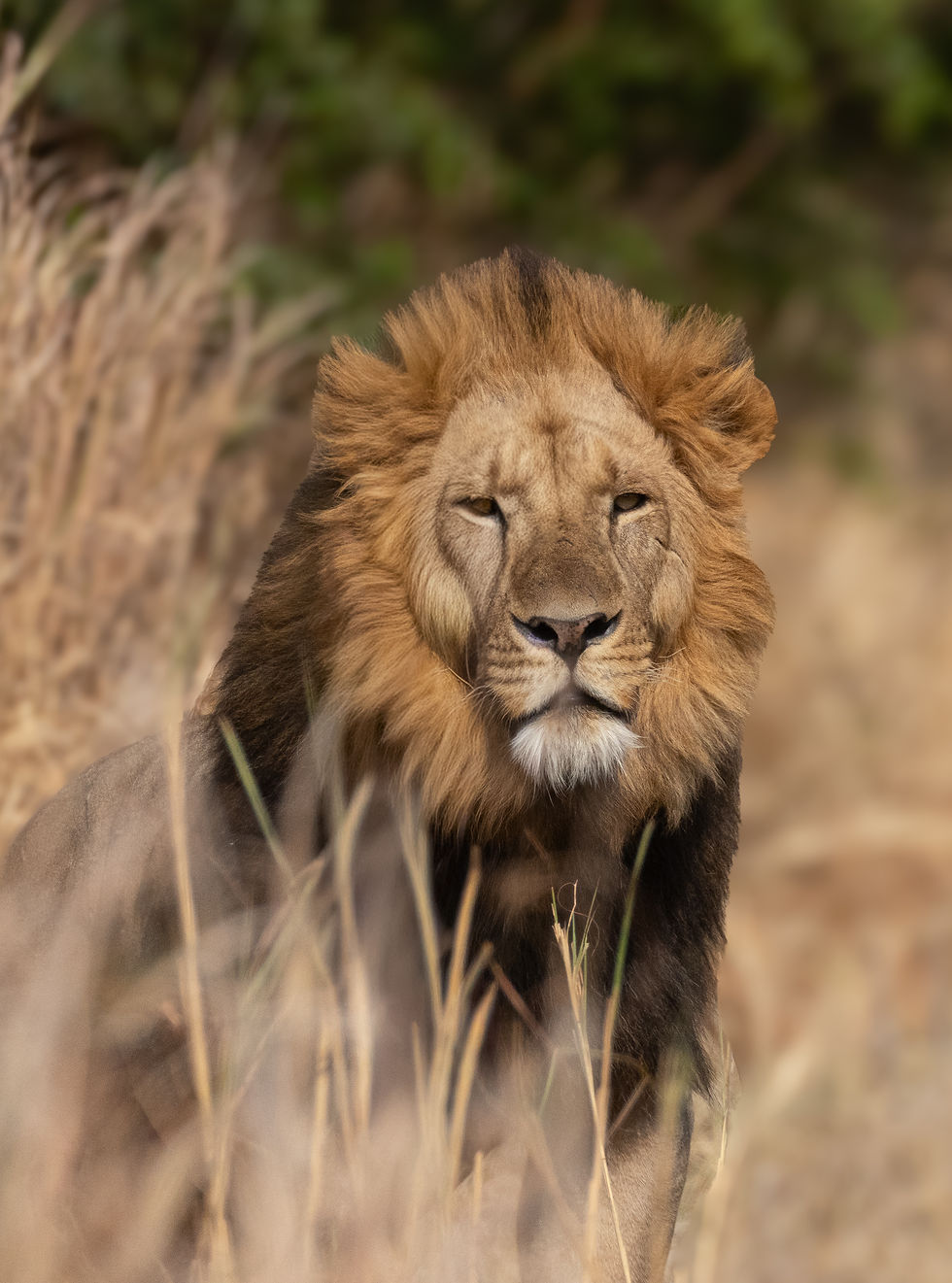
For young male lions, leaving the pride in which they were raised is a normal part of growing up. As they approach maturity, competition with established males eventually forces them to look elsewhere, sometimes travelling considerable distances before finding an opportunity to establish themselves.
Male lions that remain together can form coalitions, improving their chances of eventually taking over a pride and holding a territory.
The appearance of these three males around Musekese gives us another story to follow. Will they remain together, settle in the area, or continue travelling through Kafue?
What's particularly interesting to us is that we have people following these developments at both ends of the journey.
On Busanga, ZCP and the safari guides are building up the history of the prides and their offspring. Further south, Musekese Conservation carries out extensive carnivore research, including GPS collaring, camera-trap surveys and individual identification, while the Classic Zambia guides contribute their observations from daily activities.
Together, these sources of information allow us to begin connecting the lives of lions across different parts of Kafue, rather than treating each area as an isolated population.
And we'll be particularly interested to hear what becomes of these three males.
A well-earned retirement for Princess
Back on Busanga, there's also some particularly welcome news about Princess herself.
She's now over eleven years old and, according to the latest ZCP observations, remains in excellent condition.
That's encouraging for a lioness who has lived through so much of Busanga's changing lion history.
Over several years, her tracking collar has provided researchers with an enormous amount of information about the movements of the Shumba lions, their relationships and the areas they occupy.
But the ZCP team have decided it's time for Princess to retire from collaring.
They plan to remove her collar towards the end of the 2026 season, leaving Vega and Yaya as the two collared females in the central Busanga system.
And it's rather nice to know that Princess can continue her life on the plains without having to carry the equipment that's helped researchers follow her for so long.
Understanding the lions we rarely see
One of the most important aspects of the ZCP research is that it helps fill the gaps in what we know about Kafue's lions.
Even on somewhere as quiet as Busanga, most of our observations naturally come from the areas accessible to the few camps operating on the plains. Beyond those tracks is an enormous amount of country where lions may go for months without being seen.
Vega is a good example. We now know she's alive and raising cubs, but there are still plenty of questions about how she's using this more remote part of the plains and whether her experience differs from females such as Princess and Yaya.
By following individuals in different areas, researchers can begin to understand patterns of survival, reproduction and movement that would otherwise be extremely difficult to piece together.
The same applies to those three males that have moved towards Musekese. Their journey is another small part of understanding how lions disperse through this huge national park, where they eventually settle and how different populations remain connected.
There's a wider significance for other carnivores too. Lions are the dominant large predators on Busanga, and understanding their distribution can help researchers interpret the movements of cheetahs and African wild dogs, both of which share the landscape with them.
The research carried out by ZCP and Musekese Conservation is particularly valuable because it combines modern tracking technology with years of field observations, camera-trap records and the experience of people who know individual animals.
And our guides have an important part to play.
With so few vehicles operating across such an extensive area, every observation can be valuable. A photograph of an unfamiliar lion, a report of cubs or the reappearance of an animal not seen for months may provide another piece of information that helps researchers understand what's happening.
It's an excellent example of the contribution that a small, well-managed safari industry can make to wildlife conservation.
Keeping in touch with home
One of the things we've always enjoyed about Busanga is that its wildlife stories continue whether we're there or not.
We've watched generations of lions come and go, and the plains are full of places that bring back memories of particular animals, encounters and events. Some of the names have changed, some of the prides have changed, and there's always another generation growing up to complicate the family tree.
We're fortunate to have the Zambian Carnivore Programme keeping such a close eye on these animals and sharing their findings. And through our close relationship with Musekese Conservation and Classic Zambia, we're also able to follow developments further south in Kafue, where the lives of individual lions sometimes connect in unexpected ways.
So, as the 2026 safari season approaches its end, it's encouraging to hear that Vega has reappeared with cubs, that Princess and Yaya have renewed their association, and that Princess herself is still in such good condition.
And, of course, we'll be keeping a particularly interested eye on those three males now exploring the Musekese area.
There's always something happening back home.
With thanks to Stephi and the team at the Zambian Carnivore Programme for sharing their latest research and monitoring news, and to our colleagues at Musekese Conservation and Classic Zambia for their continuing wildlife observations and conservation work across Kafue.
